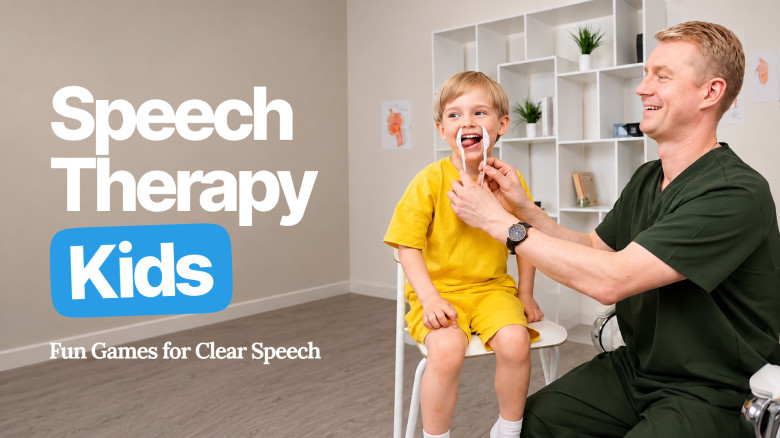
Speech Therapy Kids: Fun Games for Clear Speech
Is your child hard to understand, mixing up sounds, or speaking less than other kids their age? These challenges can affect confidence, communication, and even learning as they grow. Speech Therapy Kids turns speech practice into fun, engaging games your child will actually enjoy —no pressure, no frustration. Just a few minutes a day to improve pronunciation, strengthen speech muscles, and help your child speak more clearly and confidently.
We guarantee to refund the course purchase price, if the course did not meet your expectations. To request a refund, please email our Support Service at [email protected] within 14 calendar days from the purchase date.
Comments about the course
-

I honestly didn’t expect my son to enjoy speech practice… but now he asks to play the games himself. And the biggest win — I can finally hear the difference in how he pronounces words.
-

We’ve tried apps, flashcards, even a specialist… but nothing really stuck. This is the first time I feel like something is actually working.
-

The activities are super simple, but somehow they just work. My daughter sounds more confident, and she’s not afraid to speak anymore.
-

What I love most is that it doesn’t feel like therapy. It’s just playtime — but with real results.
-

After a couple of weeks, I noticed my child speaking more clearly and even starting conversations more often. That never used to happen.
-

This course gave me structure. Before, I didn’t know what to do or where to start. Now we have our little daily routine, and I can actually see progress.
Course includes
Fix Speech Through Play — Not Pressure
If your child:
- Mispronounces sounds or replaces them
- Struggles with sounds like R, S, or TH
- Has a lisp, mumbling speech, or stuttering
- Speaks less than other kids their age
- Avoids talking or feels shy
- Gets frustrated when not understood
You’re not alone — and most importantly, this can be improved with 10-min of daily games. With Speech Therapy Kids, you’ll learn how to:
- Improve pronunciation through play
- Boost speech development naturally
- Strengthen mouth muscles for clear articulation
- Build your child’s confidence in speaking
- Turn everyday moments into speech practice
This course gives you simple, effective tools to support your child’s speech at home — without pressure, stress, or boring drills.
Ready to hear your child speak more clearly and confidently? Join now!
How Are We Going To Do This?
This course is based on a proven principle:
👉 Children learn best through play — not pressure.
You’ll be guided step-by-step through engaging, therapist-approved techniques:
Step 1: Turn Play Into Speech Practice
Use card games and fun tools to practice sounds without resistance or boredom.
Step 2: Build Speech Through Sounds, Songs & Reading
Learn how reading aloud and singing together improves pronunciation, rhythm, and vocabulary naturally.
Step 3: Develop Language with Puppet Play
Use puppet conversations to teach pronouns and encourage communication.
Step 4: Strengthen the Speech Muscles
Practice articulation exercises, tongue movements, and mirror work to improve clarity and control.
Step 5: Support Brain & Speech Development
Use neuro games to stimulate brain areas responsible for speech.
Step 6: Improve Breathing & Oral Strength
Apply fun blowing games to develop the muscles needed for proper speech production.
By the end, you’ll have a complete system to help your child speak better — every day.
Why choose this course?
If you’ve tried apps, flashcards, or just “waiting it out” — but nothing changed, here’s why this works:
- Play-Based Method: No stress, no forcing — just fun and results
- Created by a Speech Therapist: Based on real clinical experience
- No Special Tools Needed: Use simple materials you already have
- Step-by-Step Guidance: Easy for any parent to follow
- Targets Root Causes: Not just sounds, but brain + muscles + confidence
This is not just speech practice — it’s a complete developmental approach.
Give your child the gift of clear speech. Start today.
Academic plan
9 video lessons
After payment, you can immediately start practicing
- Click the "Get Access" button, enter your email in the field and you will be taken to a secure payment page.
- Complete the order process and you will instantly receive a password to access your personal NEWMINDSTART account.
- Take lessons, perform practical tasks, ask the author questions and discover new courses.
FAQ