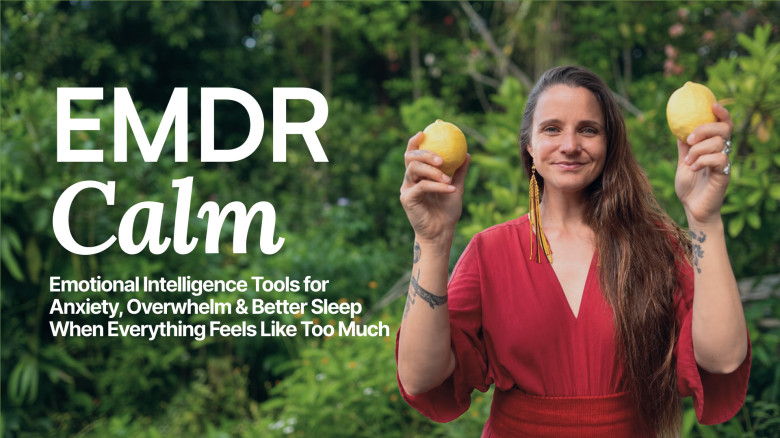
EMDR Calm: Emotional Intelligence & Neuro Tools for Anxiety, ADHD, Brain Fog and Sleep Problems
You’re tired, but your brain won’t clock out. Small things hit too hard. You lose words mid-sentence, freeze before simple tasks, and replay conversations at 2 a.m. EMDR Calm combines CBT-informed tools, EMDR-informed bilateral exercises, gentle breathwork, and nervous-system regulation to support adults 40+ dealing with anxiety, ADHD, AuDHD, brain fog, emotional overload, and poor sleep. Created by Somatic Trauma Therapist and EMDR Practitioner Sophie Sämrow.
We guarantee to refund the course purchase price, if the course did not meet your expectations. To request a refund, please email our Support Service at [email protected] within 14 calendar days from the purchase date.
Comments about the course
-

I’m 48. I thought I was just turning into an impatient person. Every little thing got under my skin, then I’d replay it all at night. Two weeks in, my husband asked why I seemed calmer. I hadn’t even noticed it happening.
-

At 53, I kept calling myself lazy. I’d stare at the dishwasher and still couldn’t start. The one-small-step lesson finally made sense. I still have off days, but now I don’t stay stuck for hours or beat myself up over it.
-

Perimenopause scrambled my sleep and memory. I’d lose words mid-sentence, then lie awake until 3 a.m. 😩 The evening routine didn’t magically fix me, but bedtime no longer feels like a fight with my own brain.
-

One text from my daughter could ruin my whole day. I’d make up ten stories before she replied. The biggest change is that I still care, but I don’t spiral for hours anymore. I can pause, check the facts, and get on with my day.
-

Crowded stores, family dinners, too much noise — I’d hold it together outside and crash at home. The grounding practice gives me something simple to do before I hit that wall. My family noticed I stopped disappearing after every outing.
-

I was diagnosed autistic at 61 and spent years thinking I just wasn’t trying hard enough. 😭 I liked that nothing here told me to force calm. I still get overwhelmed, but now I know what to do instead of blaming myself.
Course includes
You’re Not Too Much. Your System Is Overloaded.
Does This Sound Familiar?
- Racing thoughts that will not shut off
- Anxiety, generalized anxiety disorder, or panic attacks
- Brain fog, forgetfulness, and losing your train of thought
- Adult ADHD, task paralysis, and executive dysfunction
- Sensory overload, autistic masking, or a social hangover
- Emotional dysregulation: zero to 100, then regret
- Rejection sensitivity and overthinking one text for hours
- Insomnia, 3 a.m. wakeups, or feeling wired but tired
- Burnout, chronic stress, and no patience left
- Autism or AuDHD traits that feel harder after 40
You are not lazy, weak, dramatic, or “bad at emotions.” Whether you have a diagnosis or simply recognize these patterns, your nervous system may be overloaded. EMDR Calm gives you a gentle way to pause, regulate your body, and respond with more clarity.
Feel Clearer, Calmer, and More in Control Again
In just 10–15 minutes a day with EMDR Calm:
- Quiet racing thoughts before they become a full spiral
- Calm your body during anxiety and emotional overload
- Clear brain fog and return to the task in front of you
- Break task paralysis into one doable next step
- Recover faster from sensory overload and social stress
- Use a CBT-informed pause before reacting
- Practice eye tracking, bilateral tapping, and cross-body neuro drills
- Support better sleep when your brain will not power down
- Build emotional intelligence without suppressing what you feel
- Create a routine that works with ADHD, autism, and AuDHD patterns
You do not need to become a different person. You need practical tools your brain and body can actually use.
How Will EMDR Calm Work for You?
1. Notice the signal first
Catch shallow breathing, a clenched jaw, mental static, irritation, or the urge to shut down before the reaction takes over.
2. Name what is happening
Use a simple emotional-intelligence check to separate what happened, what you feel, and the story your brain is adding.
3. Regulate your body
Practice diaphragmatic breathing, 4–8 breathing, 4–7–8 breathing, box breathing, and grounding exercises that help your nervous system downshift.
4. Create the CBT-informed pause
Map the loop: trigger, automatic thought, emotion, body response, behavior. Then choose a response that helps instead of making the spiral bigger.
5. Use bilateral brain-body focus
Try gentle eye tracking, alternating taps, and cross-body focus inspired by EMDR-informed regulation for present-moment grounding.
6. Make it neurodivergent-friendly
Use short versions, low-stimulation options, and one-minute starts for ADHD, autism, AuDHD, sensory overload, executive dysfunction, and task paralysis.
7. Build your daily routine
Choose a morning clarity tool, an emergency calm-down practice, and a bedtime routine for racing thoughts, insomnia, and 3 a.m. wakeups.
Why choose this course?
Other programs tell you to “calm down”. This one shows your brain and body what to do next.
- Built by a Somatic Trauma Therapist and Somatic EMDR Practitioner with more than 10 years of experience
- Combines emotional intelligence, CBT-informed tools, EMDR-informed regulation, somatic work, and gentle breathwork
- Safety before activation — no forced emotional release, hyperventilation, or digging through painful memories
- Adaptable for ADHD, autism, AuDHD, brain fog, sensory sensitivity, and burnout
- Five guided breathing practices for stress, focus, grounding, emotional balance, and sleep
- Just 10–15 realistic minutes a day — no clinic, equipment, or perfect routine required
- Learn to notice sooner, regulate faster, and respond without losing yourself
Academic plan
10 video lessons
An overview of the course, what students can expect.
Discover the physical, mental and emotional benefits of conscious breathing, including stress reduction, nervous system regulation, improved focus, increased energy and emotional wellbeing.
Learn how to navigate the course, how often to practice, and how to gain the greatest benefit from the breathwork exercises.
Understand the foundations of healthy breathing and learn simple techniques to improve breathing efficiency and support nervous system balance.
Learn about the diaphragm, the body’s primary breathing muscle, and how proper diaphragmatic breathing can improve relaxation, oxygenation and overall health.
A calming breathing practice designed to activate the parasympathetic nervous system, reduce stress and create a greater sense of calm and safety within the body.
A powerful relaxation technique that supports emotional regulation, stress reduction and improved sleep quality.
A traditional yogic breathing practice that helps balance the nervous system, improve mental clarity, enhance concentration and create inner harmony.
Guidance on how to incorporate breathwork into daily life and create a sustainable long-term practice.
An introduction to additional opportunities for deeper healing, personal growth and ongoing support through Sophie’s programs, coaching and retreats.

After payment, you can immediately start practicing
- Click the "Get Access" button, enter your email in the field and you will be taken to a secure payment page.
- Complete the order process and you will instantly receive a password to access your personal NEWMINDSTART account.
- Take lessons, perform practical tasks, ask the author questions and discover new courses.
FAQ